CEO Policy Lab
Our Vision
CEO envisions a world where everyone coming home from incarceration has the support they need to find stability, access quality, meaningful employment, achieve economic mobility, and contribute to their communities. Every year, more than 500,000 people return home from prison, yet most receive little to no support in finding work while facing persistent economic and systemic barriers. Without the right resources and opportunities, their path to stability is blocked—leaving 75% still unemployed a year after release.
Our systems fail to invest in these individuals—workers with real talent and drive—by overlooking their needs and excluding their voices. CEO’s policy and advocacy work focuses on changing that reality by advancing solutions that expand access to employment, income, and stability during reentry.
Opportunity 2030
Opportunity 2030 is CEO’s long-term blueprint to build the reentry infrastructure America has always needed—but never invested in. It reflects a shift from fragmented programs toward coordinated systems that make opportunity accessible, effective, and scalable.
By 2030, CEO aims to:
Reach 127,000 people returning home through direct services, partnerships, and systems change
Expand from 12 to 20 states, strengthening reentry ecosystems nationwide
Unlock $750 million in public investment to support employment, income, and stability
Grounded in evidence and lived experience, Opportunity 2030 connects policy, practice, and innovation to lay the foundation for a national reentry system where people have access to income, stability, and opportunity on day one.
Building Reentry Infrastructure at Scale
CEO’s FY26–FY30 Strategic Plan translates Opportunity 2030 into action. Our goal is not only to grow CEO’s direct services, but to expand access to high-quality reentry employment nationwide by strengthening organizations and systems beyond our own.
CEO advances this work by:
Supporting local organizations to build capacity and access sustainable public funding
Influencing policy and public systems so resources are invested in evidence-based approaches that work
Bringing CEO’s model to new communities where need is high and public-sector alignment is strong
Together, these efforts help ensure opportunity is scalable, sustainable, and not limited by geography—so everyone returning from incarceration has a fair chance to succeed.
Our Policy: Top Level Priorities

SNAP
Paid work opportunities, paired with food security, are the foundation of successful reentry—and central to Opportunity 2030. SNAP and SNAP Employment & Training help returning individuals build skills, stabilize, and access employment, but policy gaps threaten progress. Explore how CEO is advancing bold solutions to align workforce and food systems and unlock lasting economic mobility nationwide.
Learn About SNAP



A Piece of What We Think
Featured Policy in Action
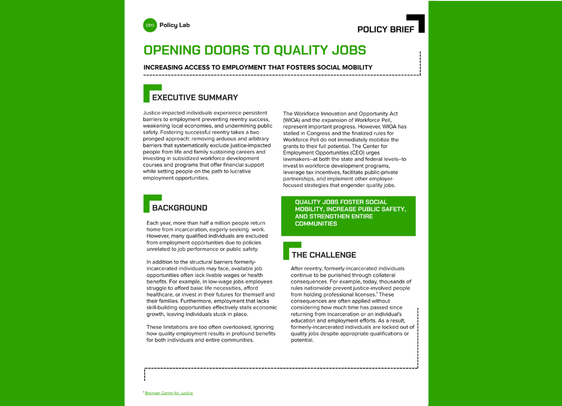
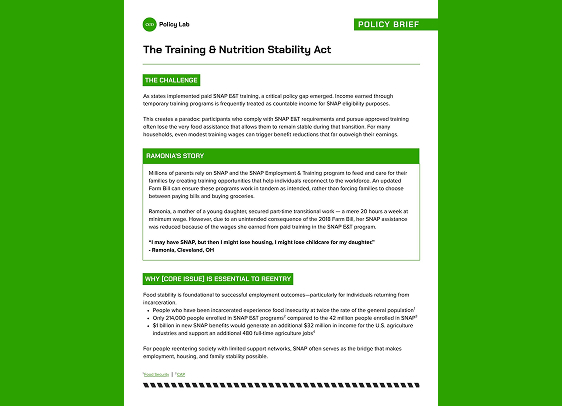
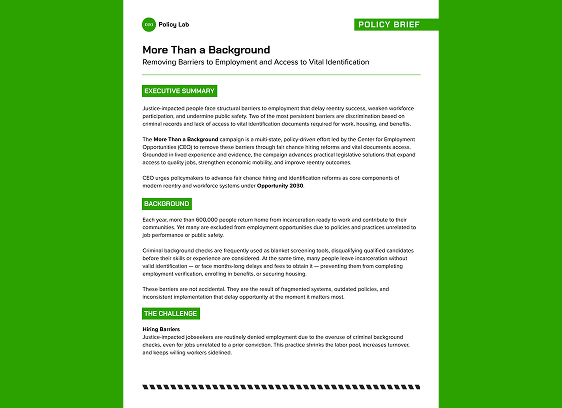
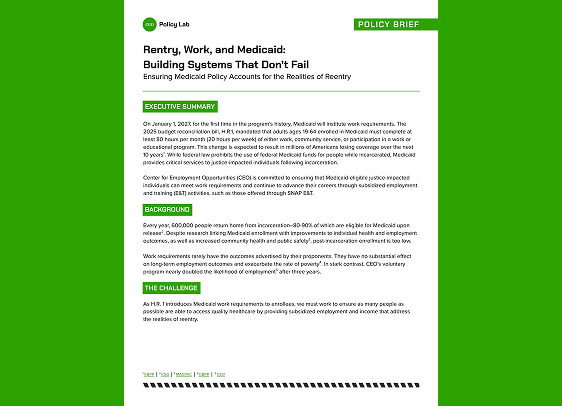
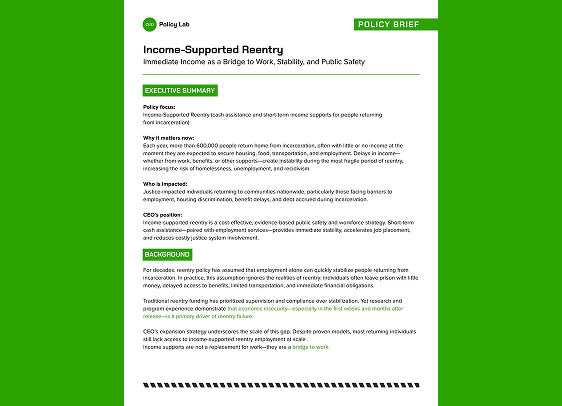
Policy Briefs
.png)
.png)

Organizing at CEO
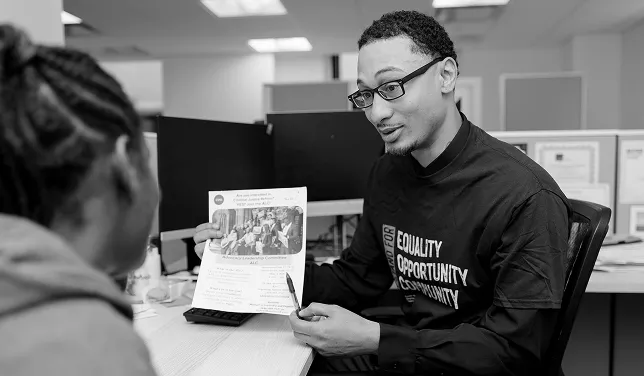
The Center for Employment Opportunities (CEO) believes every person returning from incarceration should have the opportunity for full participation in society. Yet, people who have been impacted by mass incarceration are denied access to occupations and civic activities that would allow them to influence policy and systems. Public policies will have greater impact when crafted, championed and implemented by the people directly affected. In 2021, CEO launched the Organizing team to support justice-impacted leaders.
Advocacy Leadership Committee (ALC)
The Organizing team facilitates multiple opportunities to develop the advocacy and leadership potential of justice-involved people with diverse backgrounds, interests and professional goals. The Advocacy Leadership Committee (ALC) is a paid training program offered in several states as a supplement to CEO’s regular job development services.
Through this 6-week evening virtual immersive program, ALC members gain a firm understanding of the democratic process, hone storytelling, and develop public speaking skills.
Policy Committee
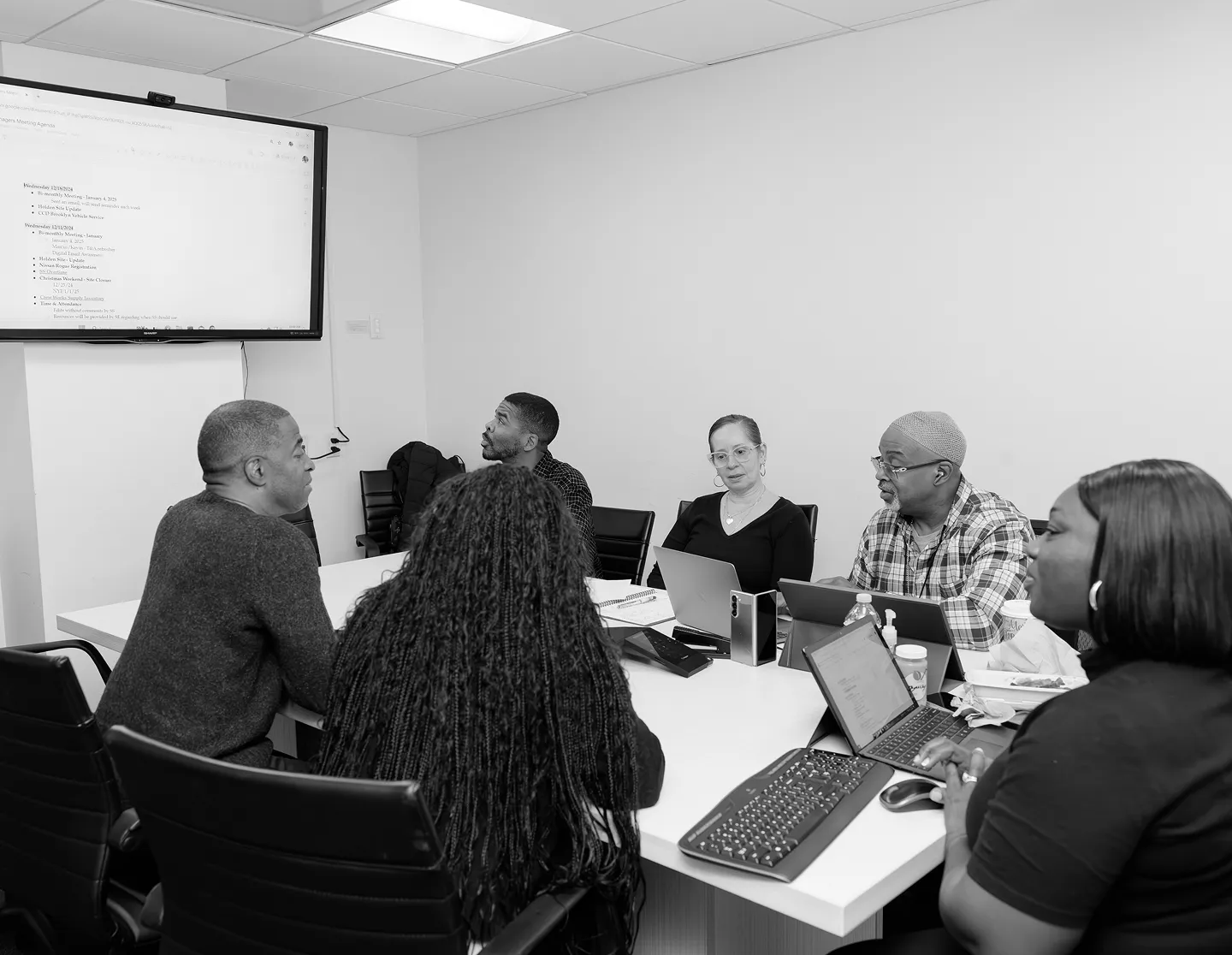
Individuals with a key interest in CEO’s policy priorities are invited to join the Policy Committee. Members continue to build upon existing skill sets, engage directly with elected officials and form new relationships on behalf of CEO’s campaigns.
Advocacy Fellowship
ALC alumni also have the opportunity to apply for the Advocacy Fellowship, a minimum 6-month work-based learning opportunity where fellows join the organizing team full-time, and acquire the training and practical experience necessary to launch a career in the social sector. The fellowship begins with completion of CEO’s 16-week internal apprenticeship program, known as the Emerging Leaders Program (ELP).
Fellows exit with a Certificate in Social Justice and Community Organizing through the University of Michigan.
CEO’s advocacy is fueled by the unique contribution of every person connected to CEO, and the belief that everyone, regardless of their past, deserves the opportunity to achieve a strong future. To that end, in FY24 we mobilized more than 700 impacted leaders within our organization and engaged nearly 200 public officials to advocate for our campaigns and ensure access to economic opportunity.
Please contact policy@ceoworks.org for more information on CEO's policy and advocacy work.