.jpg)
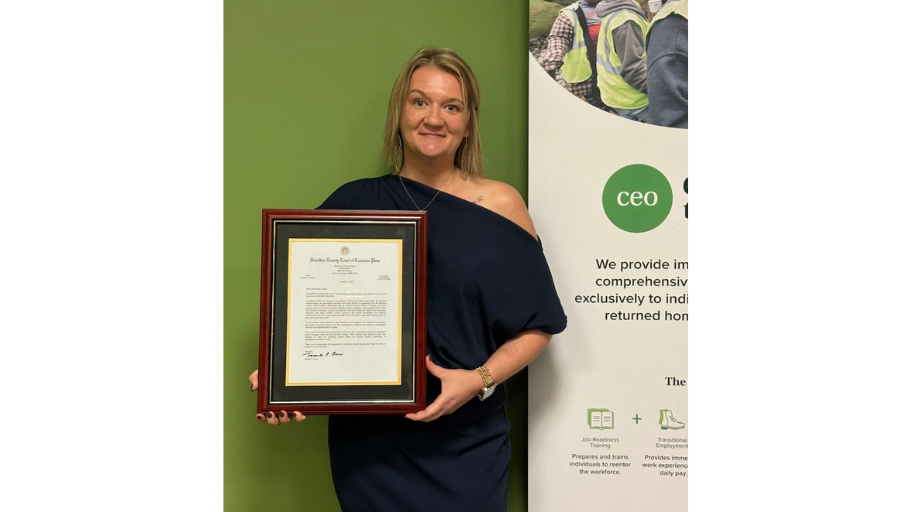
By Joli Cooper, CEO Board Member
Black History Month is one of many moments throughout the year to celebrate and honor the significant contributions Black Americans have made to our nation’s history. It is also a time to reflect on the future we are collectively building and to speak honestly about the systems that continue to limit opportunities for far too many Black Americans – particularly our justice-impacted brothers and sisters. Among these challenges, few are more consequential, or more often overlooked, than barriers to financial inclusion and access to economic opportunity.
I come to this conversation shaped by both personal experience and professional perspective, informed by the promise of economic justice and the consequences when it remains out of reach. My family owns one of the fourteen remaining Black-owned and operated banks in the United States. At a time when mainstream financial institutions routinely denied Black families access to capital, credit, and even basic banking services, Black-owned banks served as an economic lifeline - financing homes, small businesses, education, and embracing aspirations the broader economy refused to recognize. Financial inclusion, in this context, was never an act of charity; it was, and remains, an act of economic justice.
Black-owned banks were founded because systemic discrimination and financial exclusion from mainstream banking made them necessary. And while much has changed, the underlying truth endures: when Black communities are denied fair access to economic opportunity, inequality is not incidental, it is the predictable outcome.
That is why I believe, unequivocally, that equal access to economic opportunity is racial justice. This conviction has only deepened over more than four decades of experience across global business, private equity, venture philanthropy, and community leadership and it continues to guide my commitment to building a more inclusive and equitable economy.
The Myth of a Level Playing Field
Race and economics are often discussed as separate issues – one moral, the other financial. History, however, tells a different story. From redlining and discriminatory lending to employment practices that continue to exclude justice-impacted job-seekers, race has long influenced who has access to economic opportunity and self-sufficiency and who does not.
Today, one of the clearest reflections of this dynamic is found in hiring practices. Black Americans are disproportionately impacted by the criminal legal system, not because of higher rates of criminal behavior, but due to longstanding inequities in policing, sentencing, and access to quality legal representation. As a result, millions of capable and qualified individuals face barriers to employment long after they have completed their sentences.
Too often, a criminal record becomes a permanent economic penalty. When employers automatically disqualify candidates based on past justice involvement, they are reinforcing systemic barriers to financial stability and economic mobility. These decisions shape who is able to secure meaningful work, support their families, and build a stable future.
For these reasons, fair-chance hiring is not only a workforce strategy – it is both a racial equity and economic justice imperative.
Recognizing these disparities is only the first step. The more important question is what leaders, employers, and institutions choose to do in response. Addressing inequity in hiring is not about revisiting the past, it is about shaping the future. When organizations commit to fair-chance hiring practices, they move beyond awareness and into action, transforming opportunity into access and intent into impact.
What Business Has Taught Me
I’ve spent my career in corporate leadership across consumer packaged goods, private equity, and venture philanthropy and understand the realities employers face, the responsibility to manage risk, protect culture, and deliver results. Those pressures are real, and they matter. And I’ve also learned something just as important: business success is driven by people. Talent, commitment, and potential are an organization’s most valuable assets.
Fair-chance hiring has never been about lowering standards. It is about removing systemic barriers that limit who we see and how we evaluate talent. It is about meeting people where they are today and recognizing their potential, not defining individuals by their past. Some of the most meaningful lessons I’ve learned didn’t come from boardrooms or balance sheets. They came from working with individuals who were eager to work, qualified to contribute, and deeply committed to building better lives, yet they were repeatedly turned away because of a past mistake. I’ve seen firsthand how a single opportunity can change a person’s trajectory and future.
Organizations that embrace fair-chance hiring often discover stronger retention, deeper employee loyalty, and access to a talent pool they might otherwise overlook, especially in today’s competitive labor market. This isn’t just a moral imperative; it’s smart business.
And yet, stigmas persist. Too many systems are shaped by fear and ignorance rather than evidence, and too many policies prioritize convenience over fairness. When we allow those systems to continue unchanged, we must be honest about who bears the cost, and who is left behind.
Economic Justice Is Intergenerational
One of the most enduring lessons I’ve learned, from my family’s business legacy and professional career is that economic opportunity compounds, much like wealth itself. When individuals have access to stable employment and fair wages, they are able to build financial security that strengthens families, expands choices, and creates pathways to generational wealth.
Conversely, when individuals are excluded from economic opportunity because they are justice-impacted, the consequences extend far beyond the individual. Families face financial instability, children grow up with fewer resources, and communities bear the long-term effects of constrained economic participation, not due to a lack of effort or talent, but because the door to opportunity is closed.
When pathways to employment are opened, the impact is transformative. A livable-wage job can be the turning point between financial instability and security, between continued justice system involvement and successful reentry, and between scarcity and hope for the next generation. Fair-chance hiring is not simply about access to a job, it is about restoring opportunity, dignity, and deserved belonging.
For this reason, organizations committed to economic justice must recognize fair-chance employment as a vital strategy for advancing racial equity, economic mobility, and lasting community prosperity.
Black History Is Still Being Made
As we commemorate a century of celebrating Black History Month, we do so with both gratitude for the sacrifices of the past and optimism for the opportunities of the future. Black history is not confined to one month, it is a living legacy, shaped by resilience, innovation, and leadership that continues to influence every aspect of our society. While we honor the contributions that brought us here, we also embrace our responsibility to keep making history through purposeful action and community-centered solutions.
Our Black history is the foundation upon which we will build our Black future. That future is strengthened when we invest in economic justice through inclusive workforce development. We must support employers who lead with courage, and champion policies that expand opportunities for economic mobility for our justice-impacted brothers and sisters. By focusing on access, inclusion, and shared prosperity, we help ensure that access to economic growth reaches those who have historically been left out.
Building economic justice is an ongoing and collective journey—one partnership, one employer, and one community at a time.
A Call to Leadership
As a board member of the Center for Employment Opportunities, I have seen firsthand what becomes possible when values are translated into action. I have witnessed individuals reclaim their lives through meaningful work and economic inclusion, and I have seen employers grow stronger by choosing possibility over prejudice.
The challenge before us is not a lack of solutions. Too often, it can be attributed to a lack of courage necessary to confront outdated assumptions and redesign systems that no longer serve our communities or our economy. Fair-chance hiring is one of the most immediate and impactful ways to advance economic justice. It moves us from exclusion to opportunity and affirms the dignity and potential of every individual.
The mission of my family’s bank remains unchanged: to expand economic opportunity, create shared prosperity, and build generational wealth. We know that economic access is power and justice – and power essential to freedom. If we are committed to building a more just society, we must build an economy that gives everyone a fair chance to contribute, to earn, and to thrive.
This is more than sound policy. It is more than good business. It is economic justice.
About the Author
Joli Cooper is an accomplished leader and board director with over 40 years of global business experience. She recently retired as the Founding Executive Director of GreenLight Fund Atlanta, a venture philanthropy fund committed to investing in evidence-based social innovations that address barriers to economic mobility for low-wealth families in metro Atlanta. Prior to joining GreenLight Fund, she was a founding member of CSW Private Equity Investments, a private equity firm specializing in buyouts, recapitalizations and growth capital financing in middle market companies, serving on the Board of Directors of privately-held Berkshire Blanket, Sqwincher Corporation, and H20+ Plus. She currently serves on the Board of Advisors for Topspin Consumer Partners.
Joli’s career as an operating executive includes domestic and international marketing and general management roles at Nestle, Tropicana, Seagram and Vitality Beverages, Inc. She launched new products in Latin America, led global marketing initiatives in the United Kingdom and was named President and Chief Operating Officer of Pasco Brands, once the largest private label juice manufacturer is the United States. Additionally, Joli was honored to serve as 25th National President of Jack and Jill of America, Incorporated, the oldest African American family organization in the United States with over 250 chapters and 40,000 family members.
Committed to her community, Joli currently serves on the board of the Center for Employment Opportunities and Kindred Futures, formerly the Atlanta Wealth Building Initiative.