Game Plan For
Opportunity

We're All On The Same Team

It takes all of us to build an economy that works for all.

Anchored in the spirit of the NFL Draft and Fair Chance Month, the Game Plan for Opportunity campaign shows how belief in the potential of justice-impacted job seekers builds stronger teams — on and off the field.
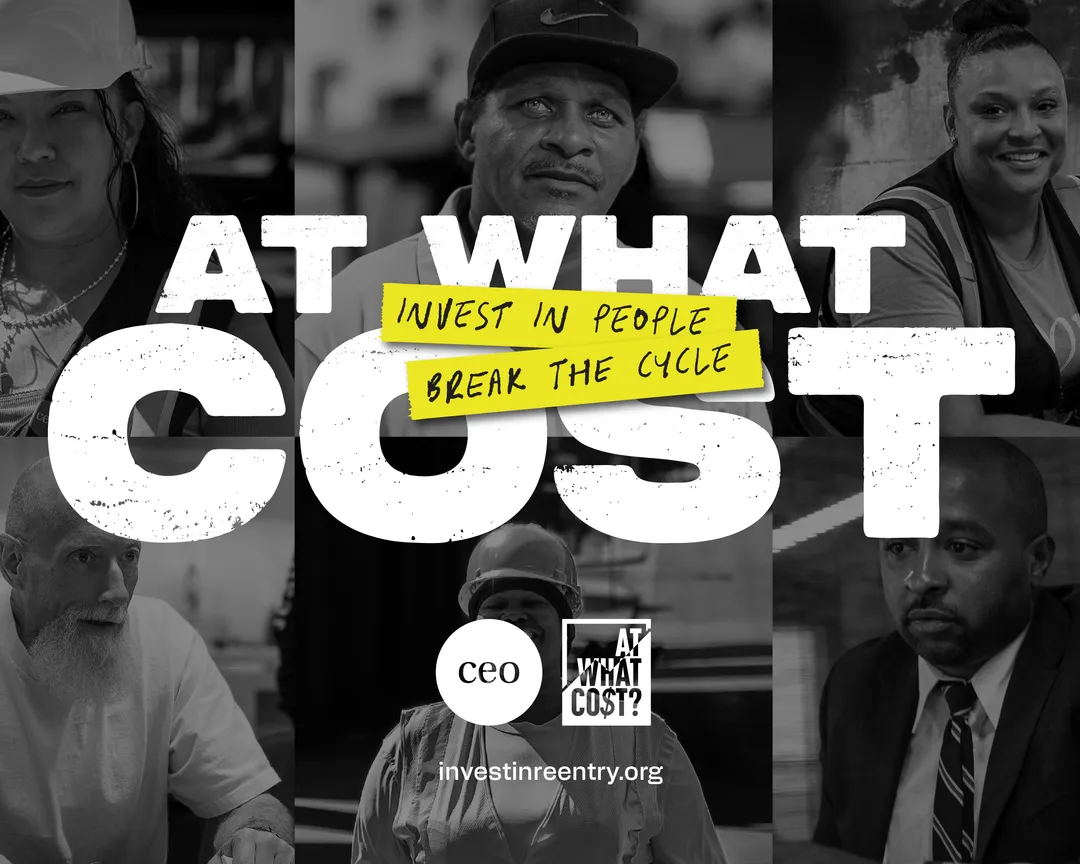

At What Cost?’ is a campaign that exposes the staggering economic and societal toll of mass incarceration–and calls for what we know works: investments in reentry services and direct financial support for people returning from incarceration.

Learn More

About The Campaign

Building Stronger Teams Through Fair Chances

Game Plan for Opportunity is a collaboration between NFL Inspire Change and the Center for Employment Opportunities (CEO). Anchored to the NFL Draft and Fair Chance Month, the campaign highlights how fair-chance hiring creates access to talented, motivated individuals ready to contribute.

Just as NFL teams evaluate players based on readiness, work ethic, and potential — not just past setbacks — businesses can do the same.

Because when justice-impacted individuals find work, our communities and entire economy scores.

“We’re both Broncos fans.
We both want to win.
We’re on the same team.”

Why Fair Chance Hiring 
is a Winning Strategy

Macro-Economic Cost

$87 Billion in Lost GDP

Employment discrimination against people with criminal records costs the U.S. economy up to $87 billion annually in lost GDP.

Why this matters:
That represents lost productivity, underutilized labor, and preventable workforce gaps.


Business takeaway:
Fair chance hiring isn’t just inclusion — it’s economic efficiency.

Talent Pool Expansion

66% of HR Teams Are
Already Doing It

By 2021, 66% of HR professionals reported their organization had hired someone with a criminal record — up from 49% in 2018.


Why this matters:
This is no longer niche. It’s becoming standard workforce practice across industries.


Business takeaway:
Companies that refuse to consider this talent pool are shrinking their pipeline while competitors expand theirs.

Workplace Conduct

Fewer Policy & Attendance Violations

A 2015 study found that employees with conviction records had fewer attendance, policy, and behavioral violations than colleagues without records.


Why this matters:
Attendance reliability and rule compliance are core drivers of operational efficiency.


Business takeaway:
Fair chance hires may be among your most dependable team members.

Performance

85% of HR Professionals Say They Perform As Well or Better

85% of HR professionals say employees with criminal records perform as well as or better than those without records.


73% of business leaders and 75% of HR professionals
say workers with records are just as dependable — or more so — than others.


Why this matters:
This directly challenges the “risk” narrative. The people managing performance are reporting equal or better outcomes.


Business takeaway:
Hiring managers are seeing measurable reliability and productivity — not increased liability.

Retention Advantage

Turnover Drops Significantly

Companies that intentionally hire people with criminal records report substantially stronger retention outcomes.

Nehemiah Manufacturing, a fair chance employer, reports a 15% annual turnover rate — compared to a 38.5% industry average. At Total Wine & More, turnover dropped from 25% to 11% after launching a fair chance hiring initiative.


Why this matters:
Replacing an employee costs between ½ to 2x their annual salary. Lower turnover directly reduces recruiting, training, and lost productivity costs.


Business takeaway:
Fair chance hiring can significantly reduce turnover costs and improve workforce stability.

Get in the Game by Building Your Gameplan

Visit the Impact Hiring Hub — your step-by-step guide to adopting Fair Chance Hiring practices.