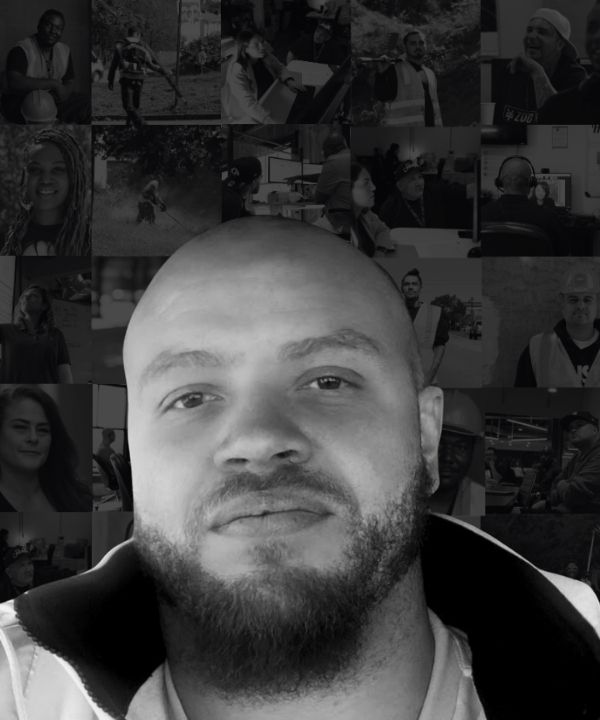
Alex always loved working on cars. As a young man in Colorado Springs, he worked as a mechanic right after high school. He became so good at the job that he was soon working for several major dealerships around the city.
“I like turning wrenches, that’s my thing,” Alex said.
Alex graduated during the 2008 recession and hit the ground running, taking on two additional jobs alongside his mechanic work to make ends meet. In the years that followed, he worked hard, paid his bills, and welcomed the birth of his daughter. However, while you can choose your job and your partner, you can’t choose your family. Alex says that despite his accomplishments, it was hard to shake the poor lessons he learned growing up.
“My father was terrible and not around. Everyone in my family had a record, my brothers were constantly getting into trouble, and I was seeing them all the time, so I followed suit,” Alex said.
Research shows that having delinquent siblings directly increases a child’s risk of delinquency, disrupting home life and behavioral health. For Alex, this environment led to poor choices, anger issues, lost jobs, fights, and a strained bond with his daughter.
“I had abandonment issues. I kept getting involved in toxic relationships, and I hung out with people who were no good,” Alex said.
“Nothing seemed to be working right for me. People didn’t understand me, and I was pissed off all the time.”
Inevitably, his past, anger, and choices brought him face-to-face with the criminal justice system. In 2017, after getting into a fistfight, he was charged with a felony and placed on ten years of probation. He says it made finding a job nearly impossible.
“As soon as they saw my record, nobody would hire me,” Alex said.
A recent study found that job candidates with prior violent offenses are seen as less trustworthy, valuable, and suitable for employment. Another survey found that 75% of hiring managers were unwilling to seriously consider applicants convicted of violent crimes. With a violent felony on his record, Alex found the doors to employment tightly closed and, like many others in his situation, returned to old habits to survive.
“Without work, I just couldn’t say no to the criminal element,” Alex said.
In 2024, when he was arrested a second time, he says it was the wake-up call he needed.
"I was exhausted from the street life, the fighting, and not living like a normal person," Alex said.
“I decided to cut everything that was toxic out of my life and try to be different.”
Breaking off contact with his family, Alex entered cognitive therapy and anger management classes. His probation officer helped him secure transitional housing and later referred him to the Center for Employment Opportunities, where he began transitional work beautifying highways. Most importantly, he says he found people who, for once, saw him as a person.
“I’m 6'5”, 300 pounds, and I have a lot of tattoos, so people are often automatically terrified of me. They see me as a monster and a criminal,” Alex said.
“The people at CEO talked to me like I was a regular person, included me, remembered things about me, accepted me for who I was, and saw that, even though I’m not very sociable, I'll never stop going out of my way to help people.”
Whether it was helping a fellow teammate who was having a hard time keeping up with the day's workload, or just sitting down to take the time to listen for a little while, Alex was always there. He showed up to the work site early, stayed late, and did his best every day to serve the program and become a more functioning member of society.
Because of his drive, compassion, and work ethic, Alex was nominated for CEO's Social Enterprise Emerging Leaders Program, a 12-week paid internship where participants receive job training and mentorship to build marketable, high-demand skills and lead their own work crew.
“They saw me as a leader when I never did,” Alex said.
When he completed CEO’s program in 2025, he left ready for a new future, with savings in his pocket and multiple letters of recommendations from his peers. Soon after, he accepted a job as a transportation maintenance technician at the Colorado Department of Transportation. Today, he’s earning a stable salary with guaranteed annual and tri-annual raises, a retirement plan, and full medical coverage for him and his daughter.
The stability has allowed him to finally realize the basic comforts of a simple life, make plans to eventually own a home, and dream of having a wrench back in his hand and retiring somewhere warm all year round.
“All I want is to own a house that’s big enough for a guy my size, have a few drinks on the weekend with friends, enjoy a social gathering here and there, rebuild a 1965 Chevy Impala lowrider convertible, and then retire to Mexico. That’s about it,” Alex said.
“Life’s calm, peaceful, and quiet now. After spending the last ten years in turmoil and chaos, I’ll take it.”
Stay connected—sign up for our newsletter to learn how CEO supports justice-impacted individuals through career building, advocacy, and policy change. Check out more stories on our blog or donate to support economic mobility.
