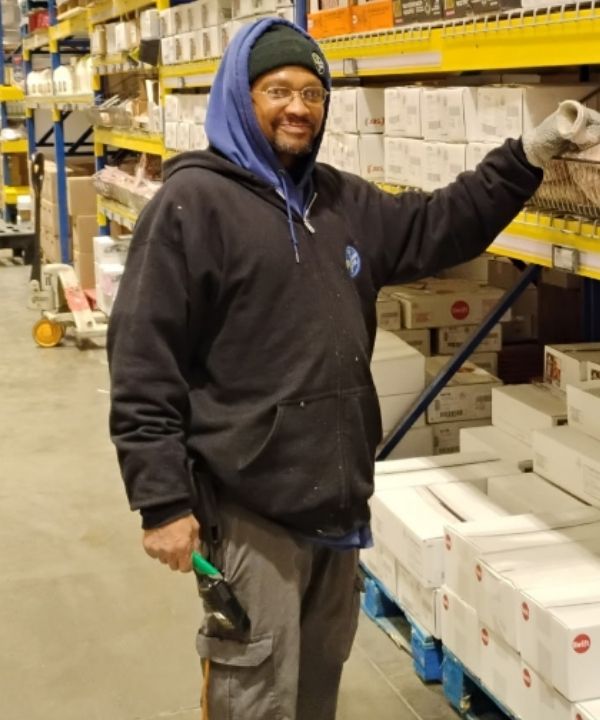
In June 2025, Jamar was released from prison. Today, he has two jobs, a savings account, and plans for the future, but he says one of his favorite things about his new life is getting to drive again.
“I like being on the road,” Jamar said.
“There’s more freedom out there.”
The oldest of three children raised by a single mom, Jamar grew up in Pittsburgh along with two adopted cousins. His father wasn’t always around, so he attended night and summer school while working odd jobs to help pay bills and buy groceries. In 1993, after he graduated from high school, he immediately found work in waste management, driving a recycling truck. Three and a half years later, he switched to driving paratransit vans.
But staying on the straight and narrow in Pittsburgh's Homewood neighborhood, an area originally founded by the city’s most affluent, but that eventually became one of its poorest and most racially segregated, wasn’t easy. Jamar was one of the few kids in his friend group to graduate. Drugs, guns, and violence were the norm at that time, and research shows that growing up in environments like these is associated with higher risks of contact with the criminal justice system. For Jamar, it was no different; and no matter how hard he worked, money remained an issue.
“My mom did everything she could to keep me out of trouble, and I always tried to find more work, but it was tough, and I made bad decisions,” he said.
Jamar started dealing drugs to supplement his income, a common occurrence among people living in constrained life circumstances. At the time, the popularized War on Crime and Drugs was in full effect, especially among black communities, and especially in Pennsylvania, where the state's incarceration rate from 1980 to 2017 outpaced the national rate by 200%. He ended up arrested and then incarcerated for eighteen years. When he was finally released in June of 2025, he moved into a halfway house and immediately began searching for employment. He says it was like starting his life over from scratch.
“I didn’t know how I was going to make money, and I knew I didn’t want to go back to the life that landed me in prison, but I didn't know how I was going to adapt,” Jamar said.
“Especially when everyone applies for jobs online nowadays.”
Prisons in the U.S. do not offer consistent internet access or support for the digital aspects of reentry, and formerly incarcerated individuals often return home with poor digital literacy as a result. That lack of knowledge can add further stress and insecurity to the already intimidating experience of reentry.
“Everything today is done on computers and phones, and here I was just walking around downtown Pittsburgh trying to find a job,” said Jamar.
“It was rough.”
After a month of no luck, he turned to his parole officer, who connected him with the Center for Employment Opportunities. There, he began transitional work at a local debris removal and recycling company while working one-on-one with a job coach who helped him fine-tune his resume and learn the ins and outs of applying online.
“They welcomed me, assured me that where I was at that moment wasn’t permanent, sat with me every week to help call employers, and let them know just how hard a worker I am,” Jamar said.
“They made sure I stayed positive, never gave up, and eventually that paid off.”
Thanks to CEOs' support, Jamar landed jobs as a restaurant depot stock clerk and later as a linen supply truck driver. With his dual income, he bought a bike and a car and is saving to move into his own apartment. He visits his mother and aunt regularly, wants to travel soon, and has no intention of slowing down.
“A lot of guys go back to making the same mistakes they made before they went to prison, but I feel better working and earning my own money,” Jamar said.
“And my family always said, ‘don't let no grass grow beneath your feet.’”
Stay connected—sign up for our newsletter to learn how CEO supports justice-impacted individuals through career building, advocacy, and policy change. Check out more stories on our blog or donate to support economic mobility.
